What Does STG Mean on Snapchat?
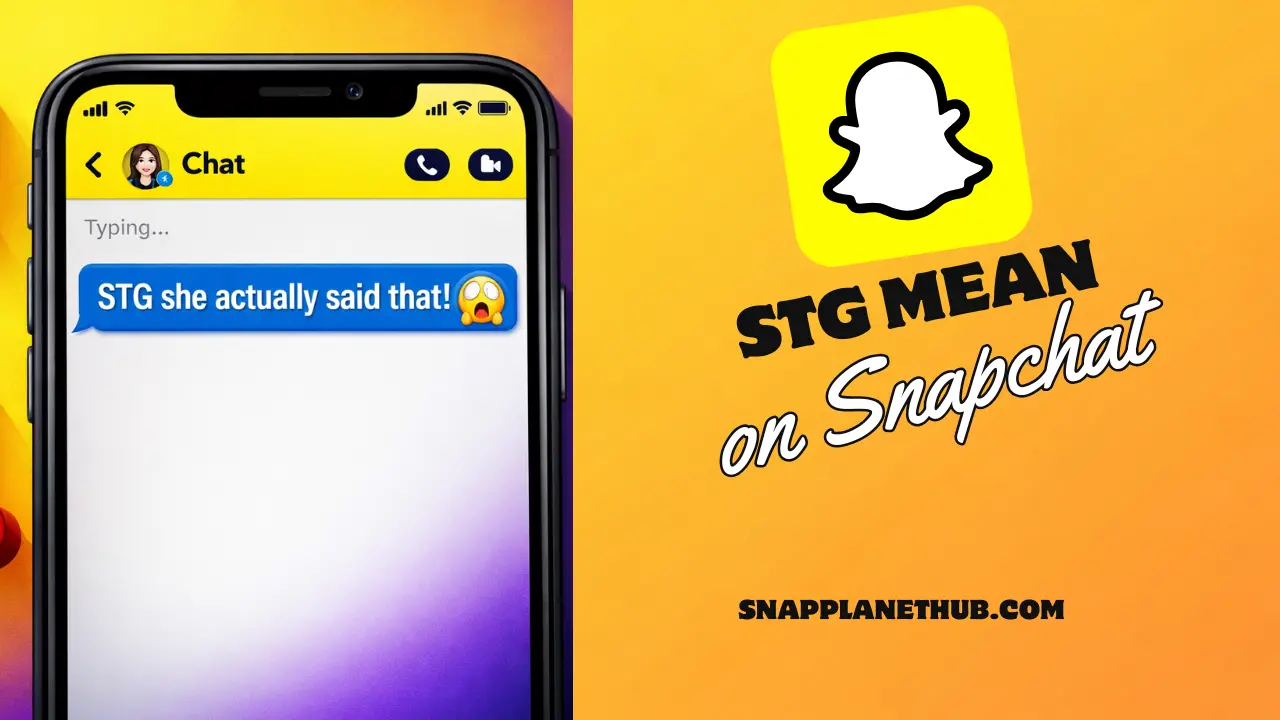
Seeing random slang in chats can be confusing. You might open a message and see someone typing “STG,” leaving you wondering, “What does STG mean on Snapchat?” If you are new to these conversations, it might look serious or even aggressive.
However, the STG meaning on Snapchat is usually about adding emphasis to a statement, whether someone is joking, exaggerating, or genuinely trying to make a point. This guide covers the STG full form in chat and how to use it correctly.
How STG Is Used on Snapchat Today
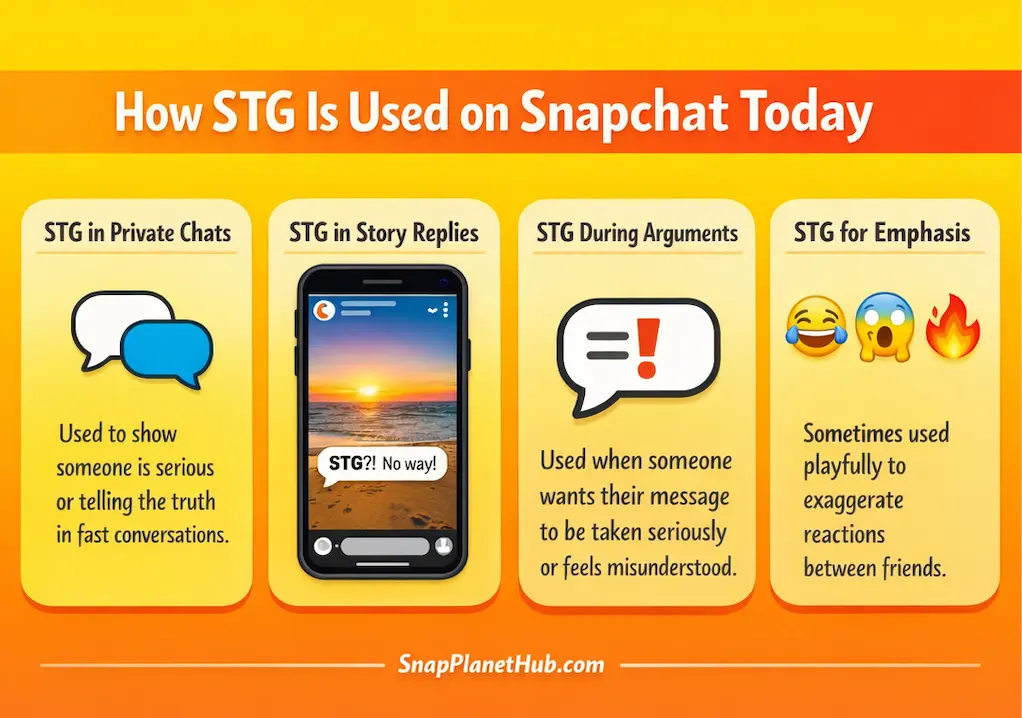
Snapchat is a popular social media app used by many young people today. Because of its nature, slang is highly used and spreads rapidly because messages are sent and received fast, and they disappear after a certain period of time.
STG in private chats
STG is used by a person when they want their friend to take what they are saying seriously. Instead of typing a whole sentence explaining themselves, they just type STG to prove a point that they are not joking or telling a lie.
It is also used by friends during casual conversations. Someone might say something surprising or unbelievable and add the phrase at the end to make the message sound more convincing. In private chats, it often feels natural because Snapchat conversations move quickly.
STG in Snapchat Story Replies
Story replies are the second term where this slang is used. When someone reacts to their friend’s post, they can use it to show their strong reaction. It can mean that the person is excited or surprised at what they have just seen.
Because story replies are usually short, users rely on quick expressions instead of full sentences. The abbreviation works as a fast emotional response. It makes the reaction feel stronger without writing a long explanation.
STG during arguments or frustration
Sometimes the term appears during heated conversations. When people feel misunderstood, they use it to stress that they are telling the truth or that they genuinely feel upset about something.
At such times, the tone may be perceived as even stronger. The message may not necessarily be aggressive, but it indicates that the person wants his/her message to be taken seriously. This understanding of the emotional context can help one avoid misunderstanding the message.
STG used for emphasis or exaggeration
Not every use of this slang is serious. Many Snapchat users add it to exaggerate reactions playfully. Someone might say something dramatic just to make the conversation more entertaining.
This style is common among friends who already understand each other’s humor. In those cases, the expression is more likely to be a dramatic expression rather than a factual statement.
The Real Intent and Common Situations for Using STG
Slang, such as STG, is not always used in a factual sense in online communications. It is often used to demonstrate how a person is feeling, to stress how honest a person is being, or to make a dramatic expression in a chat or online conversation. STG is used in a number of common situations in online communications. The expression is often used when a person is trying to prove that they are telling the truth, defending themselves, or reacting to a shocking or comedic situation in a chat or online conversation.
It can be used to make a joke more expressive, to stress frustration, or to stress how honest a person is being in a message or chat, and so on. By understanding the common situations in which the expression is used, you can better understand the intent behind the expression and respond accordingly, rather than misinterpreting the expression in a dramatic Snapchat conversation.
How Tone Changes the Meaning of STG
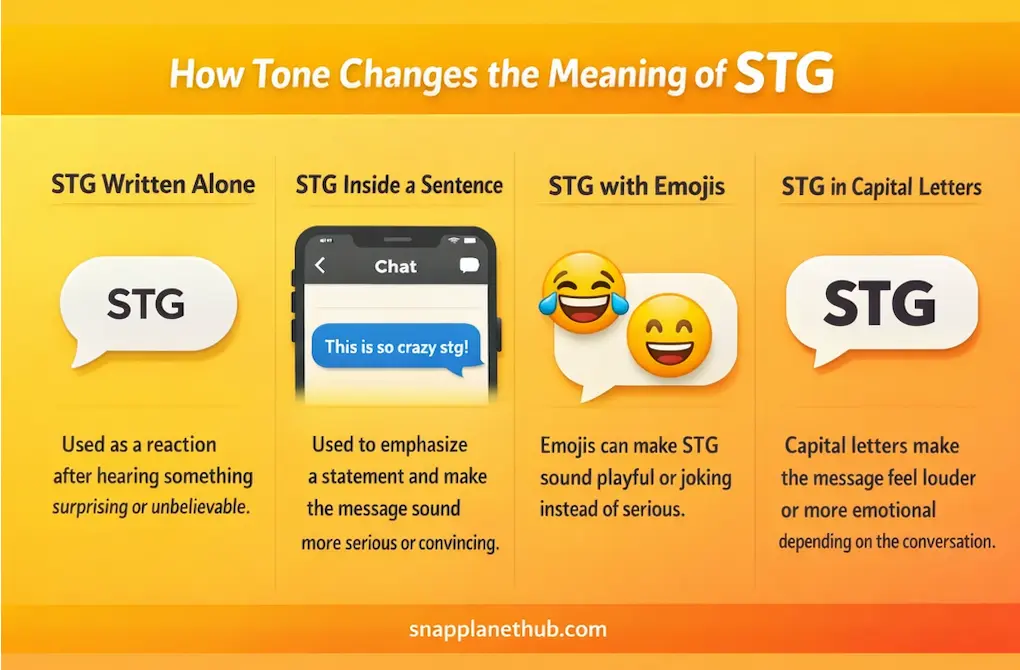
The tone is a great contributing factor in understanding slang terms on social media. For instance, a particular abbreviation can mean different things depending on how it is written. It can mean serious, sarcastic, or even playful. Tone is important in ensuring that readers do not misunderstand the content. It is essential to understand a Snapchat message.
STG written alone
When the expression appears by itself, it usually acts as a reaction. Someone might send it after hearing something surprising or unbelievable.
The meaning depends heavily on the previous message. On its own, it works like a strong emotional response rather than a full statement.
STG inside a sentence
When placed inside a sentence, the phrase usually emphasizes a specific statement. It strengthens the message by making the speaker sound more serious. This structure often appears when someone wants their statement to feel convincing or dramatic.
STG with emojis
Adding emojis can change the tone completely. If the emoji used is one of laughter, then it can be interpreted that the message is only joking.
Without the use of emojis, the message may sound serious.
STG in Capital Letters
The use of capital letters can be interpreted as making the message sound louder. Some may use this way of typing the message since they want their emotions to be felt. But the tone of the message, however, depends on the context of the conversation.
How to Respond to STG on Snapchat
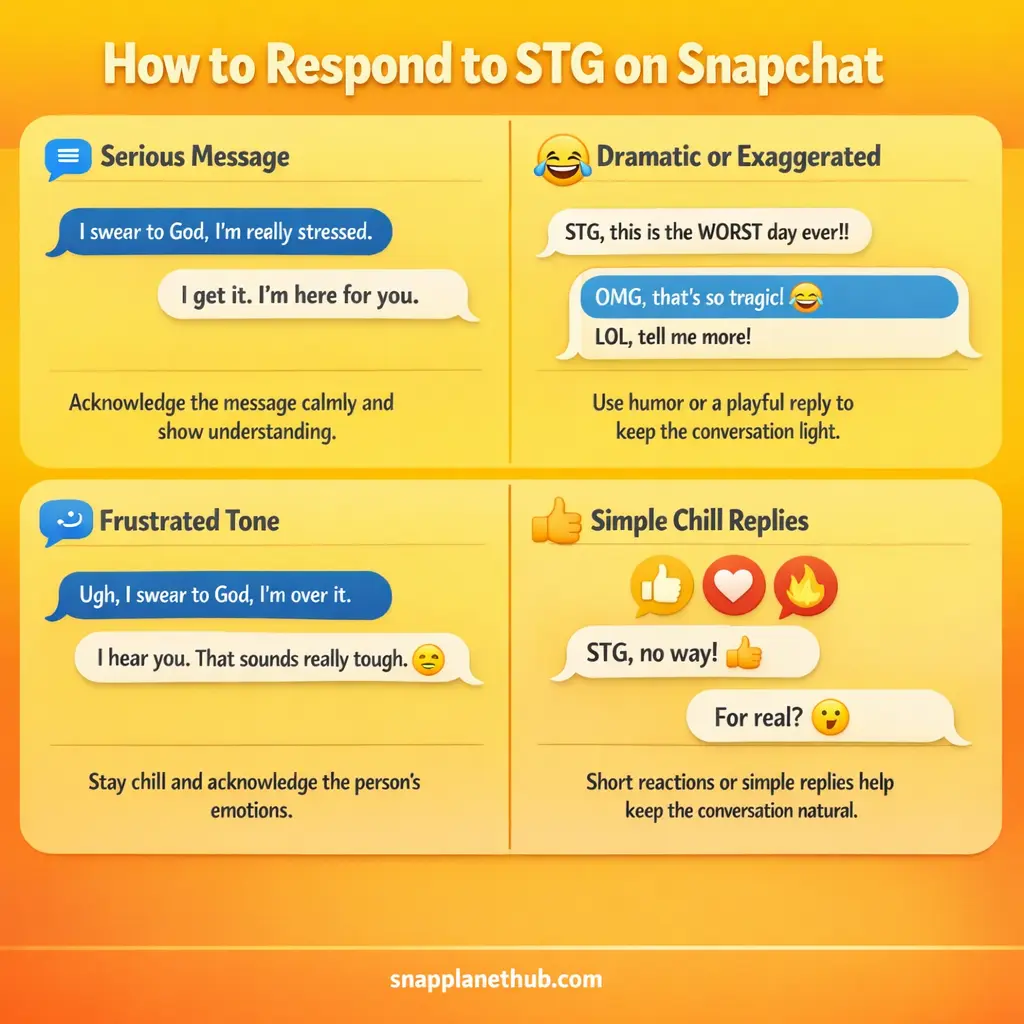
Learning how to respond is as important as understanding what the message means. A response should always be suitable for the tone of the conversation.
Whether the message is serious, dramatic, or even funny, there is always a way to respond accordingly, depending on the context of the conversation.
If someone is being serious
When the message sounds sincere, the best response is to acknowledge what the person is saying. A calm reply shows that you understand their point. This helps keep the conversation respectful. It also prevents unnecessary misunderstandings.
If the message is dramatic or exaggerated
If the tone is playful or exaggerated, you can use humor to reply to the other person. Usually, lighthearted replies will help the conversation remain fun and casual.
If the tone is frustrated
If the person’s tone is frustrated, a chill reply will help the conversation remain smooth. It is essential to acknowledge the person’s emotions, not dismiss them.
Chill replies that help the conversation remain smooth
Sometimes, the simplest way to reply is with a reaction. Chill replies or reactions will help the conversation remain natural.
When You Should Avoid Using STG
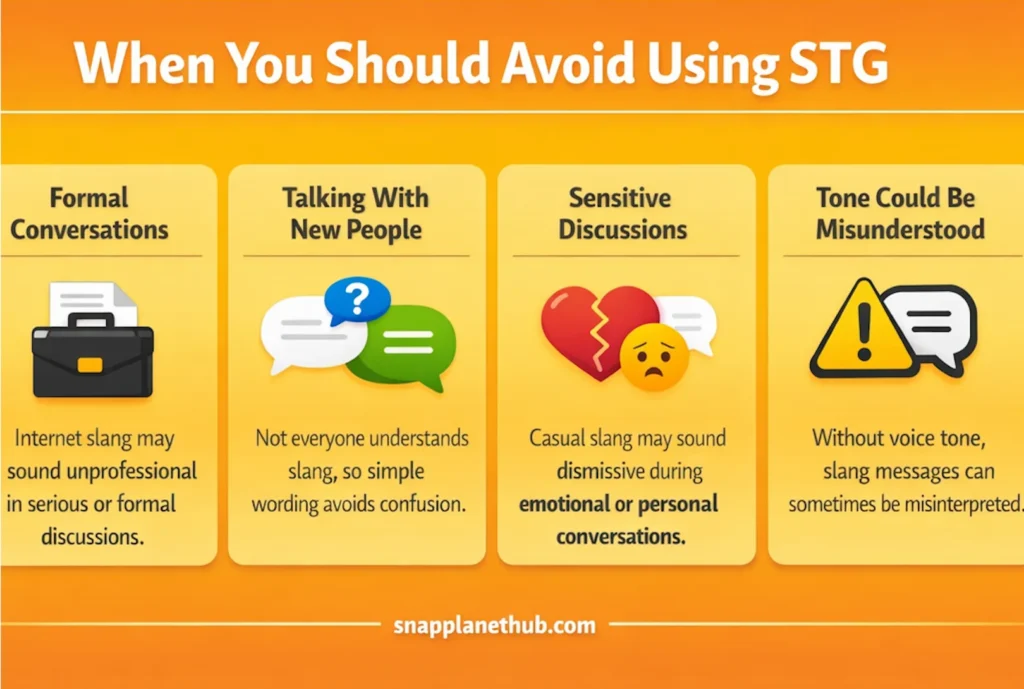
Although the use of slang is popular in Snapchat, it is not always appropriate. Some communication may require clarity or even a respectful attitude. Knowing the right time not to use internet slang helps avoid confusion or miscommunication, especially if communicating with outsiders.
Formal conversations
This type of slang is designed for casual conversations. In formal communication, it may sound unprofessional or confusing. Using clear language works better in serious discussions. It avoids misunderstandings.
Talking with people you barely know
When messaging someone new, slang can sometimes create confusion. Not everyone understands internet abbreviations the same way. Using simple wording ensures the conversation stays clear. It also avoids awkward moments.
Sensitive discussions
Serious conversations about personal issues require careful wording. Casual slang might unintentionally make the message sound dismissive.
Situations where tone could be misunderstood
Text messages lack vocal tone, which means slang can sometimes be misinterpreted. What feels playful to one person might sound aggressive to another. When clarity matters, it is better to express yourself straightforwardly.
STG vs Similar Snapchat Slang
Snapchat conversations often include many different abbreviations. The differences will ensure that you understand the meanings of the phrases correctly and do not confuse similar phrases with different connotations.
STG vs ISTG
These phrases have the same origin, but there is a slight variation in their usage. The main difference is that ISTG contains the word “I,” which makes the statement more personal.
It is often stronger because it refers to the speaker’s honesty directly.
STG vs FR
The abbreviation FR means “for real,” and it is often used to show agreement or confirmation of the truthfulness of a statement. The difference between the two phrases is that the former is often stronger than the latter because it is more dramatic.
STG vs NGL
The abbreviation NGL means “not gonna lie,” and it is often used to show honest opinions or confessions. Although the phrases show similar connotations, NGL is often more reflective.
Why is the abbreviation STG stronger than the other phrases?
The abbreviation is stronger than the other phrases because it refers to a strong phrase. This is the main reason why the abbreviation is often used to make the message stronger, even when used casually.
Common Misunderstandings About STG
Like many internet abbreviations, this one is sometimes misunderstood by people who are not familiar with online slang culture. Misinterpretations usually happen when readers focus only on the words instead of the tone.
- Thinking it is always religious: Some people think that the term is used in a religious context. However, most people using Snapchat think it is used casually.
- Assuming it always means anger: One common error is that people think the message is written in anger. In many conversations, it is simply used for emphasis or exaggeration.
- Misreading sarcasm: Text messages can make sarcasm difficult to detect. A dramatic statement is a playful exchange of humor between friends.
- Overreacting to casual slang: Sometimes people take online slang more seriously than intended. In casual chats, many abbreviations are used just for style or humor.
Why STG Became Popular in Online Conversations
Online messaging today is built around speed and simplicity. On platforms like Snapchat, people prefer short expressions that quickly show emotion or seriousness without typing long sentences. This is one reason stg slang became widely used in digital chats. It allows someone to emphasize honesty or strong feelings while keeping the conversation fast and natural.
Gen Z prefers expressive but compact language that fits casual online interactions. Abbreviations spread quickly through stories, chats, and comment sections. Just like users learn the meaning of Snapchat emojis, they also quickly pick up short slang terms that appear often in conversations.
STG Meaning in Texting
In texting conversations, the abbreviation is used to add emphasis to a statement and show that someone is serious about what they are saying. The stg full form in chat stands for “swear to God,” which traditionally signals that a person is telling the truth or strongly believes in what they just said.
Nevertheless, the rise of modern messaging has made the phrase more casual. Many users use it in their messages not to make a promise but to emphasize their level of excitement, frustration, or emotion. Knowing the meaning of stg in text enables the reader to understand the message tone correctly, especially since trends such as planets in snap or other features in Snapchat influence how users communicate within the app.
FAQs
What does STG stand for in chat?
The stg full form in chat refers to the phrase “swear to God.” People use it in casual conversations to emphasize honesty or strong emotion. In most online messages, it simply acts as a dramatic way to show that someone is serious about what they are saying.
What does STG mean in texting conversations?
In texting, the abbreviation is often used to strengthen a statement or reaction. When someone adds it to a message, they are usually trying to sound sincere, surprised, or emotionally expressive. The meaning becomes clearer when you look at the context of the conversation.
Is STG always serious?
Not always. Sometimes people use the phrase playfully when exaggerating a reaction with friends. In many chats, it simply adds emphasis rather than being a literal promise.
Conclusion
The meaning of stg on Snapchat becomes clearer when you see the way it is used in real conversations. The term is derived from a word that means extreme sincerity, but in the way it is used in online conversations, it is often used to stress emotions, shock, or frustration.
When responding to the user, the best way is to reciprocate the emotions sent in the original message. If the user is calm, then the response should also be calm, and if the user is casual, then the response should also be casual. Once the meaning of stg is clear, the way it is used becomes easier to understand in real conversations.